The Arabian Sea, Gulf of Oman, and North Indian Ocean constitute some of the world’s most complex maritime security environments, where narcotics trafficking, arms smuggling, human trafficking, Illegal, Unreported and Unregulated (IUU) Fishing, piracy, and terrorist financing intersect across high-volume commercial shipping corridors and strategic maritime trade routes.
Addressing these challenges requires maritime law-enforcement, coast guard, and naval personnel who are not merely equipped, but professionally trained to recognised operational standards — capable of making sound decisions and performing effectively under real-world threat conditions.
CANPAK Ventures provides specialised maritime security and counter-terrorism training designed to strengthen institutional capability across progressive levels of operational competency. Our programmes cover Vessel Boarding and Search & Seizure (VBSS), Bulk Carrier Boarding, maritime interdiction, evidence preservation, management of non-compliant crews, high-risk vessel operations, IED awareness, operational coordination, and maritime counter-terrorism command.
Training is developed around recognised international maritime security, safety, law-enforcement, and counter-terrorism standards and best practices, and is delivered by professionals with documented operational, instructional, and command experience.
Our objective is to develop sustainable operational capability — enabling personnel and institutions to respond effectively to complex maritime security challenges through practical, scenario-based training rather than certification-focused instruction alone.
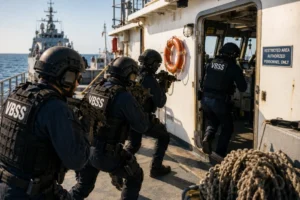
VBSS is among the most technically demanding and legally nuanced skills in maritime law enforcement. Level I establishes the foundation: vessel approach, boarding ladder techniques, crew control, and basic search procedures. Level II develops tactical search skills and evidence handling. Level III covers complex vessel types, non-compliant crew scenarios, and command coordination. Level IV prepares senior officers for tactical command of multi-boat boarding operations against actively resistant subjects. Each level builds on the last — and each is delivered by trainers who have conducted operational boardings, not merely studied them.
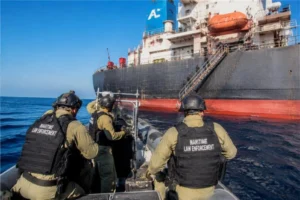
Boarding a bulk carrier is categorically different from boarding a fishing vessel or a small coastal craft. The vessel is large, the crew may be international and uncooperative, cargo holds are confined and potentially hazardous, and the legal jurisdiction questions in international waters add complexity that requires specific preparation. This programme addresses those specifics — access techniques for high-freeboard vessels, cargo inspection procedures, documentation seizure, and crew management across language barriers.
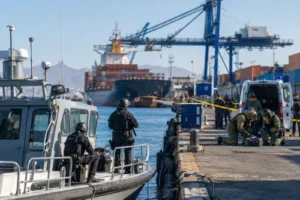
IED threats in maritime environments are not theoretical. From floating mines to vehicle-borne devices at port gates and devices concealed in cargo, the threat is real and has been documented in regional incidents. This programme equips maritime law enforcement officers with recognition skills, safety procedures, and reporting protocols — and develops the broader counter-terrorism awareness that port and coastal security operations require.
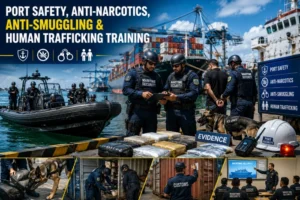
Pakistan's ports are active transit points for narcotics moving north from Afghanistan and west toward Gulf markets, for smuggled goods moving in both directions, and for human trafficking networks operating across the Arabian Sea. This programme trains customs officers, port police, and coast guard personnel in detection indicators, scanning equipment operation, controlled delivery procedures, and the legal frameworks that ensure prosecutable evidence is gathered and preserved correctly.
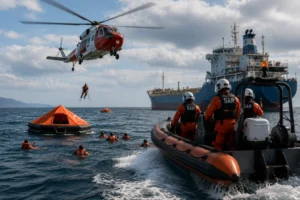
Effective maritime SAR is the difference between a life saved and a life lost. This programme covers SAR planning using International Aeronautical and Maritime Search & Rescue (IAMSAR) methodology, on-water search patterns, survivor recovery techniques, emergency medical response at sea, and the inter-agency coordination that effective SAR in Pakistan's coastal environment demands — particularly given the involvement of Pakistan Navy, Pakistan Coast Guard, Maritime Rescue Coordination Centre, and provincial emergency services.
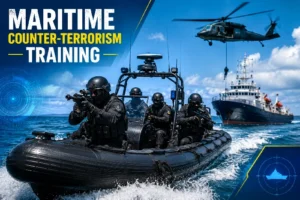
CANPAK Ventures delivers specialised VBSS, Bulk Carrier Boarding, and Maritime Counter-Terrorism training across four progressive competency levels, aligned with recognised international maritime security, safety, and counter-terrorism standards and best-practice frameworks.
Level I establishes tactical boarding fundamentals. Level II develops evidence preservation and management of non-compliant crews. Level III covers high-risk vessel scenarios, Water Borne IED recognition, and command coordination. Level IV builds advanced operational command capability for complex multi-vessel maritime security and counter-terrorism operations.
Each programme is designed and delivered by professionals with documented operational and instructional experience, ensuring that training develops practical operational competence and decision-making capability—not merely certification-level knowledge.
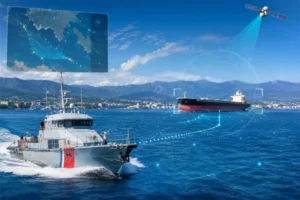
Develop comprehensive competencies in Maritime Domain Awareness through integrated surveillance, intelligence fusion, risk assessment, and real-time operational decision-making. The program covers maritime threat identification, vessel tracking, AIS, radar, satellite and sensor integration, maritime intelligence analysis, coastal security, port protection, information sharing, legal frameworks, and interagency coordination. Participants will strengthen capabilities in maritime situational awareness, incident response, search and rescue support, counter-smuggling, counter-piracy, and technology-enabled maritime security operations aligned with international best practices.